




What is rotomoulding?

It is impossible to ignore the growing popularity of rotomoulding in recent years. Spectacular production successes in many industries have led to more and more people asking us specific questions about plastics molding. As an international leader in the industry, we have decided to answer all of them collectively. We have created a special article that can be safely considered a comprehensive pill of knowledge about rotomoulding. Find out what this technology is and how its use will improve the results in your company. Trust us – the results can be surprising. And we mean this in a positive sense.
Rotomoulding – What Is It?
Rotomoulding, also known to many as rotational moulding or rotational plastic moulding, is a modern manufacturing technology used to produce a wide range of products. The process involves heating and rotating a mould filled with a dedicated polymer powder or granules – the ideal materials for this type of machine. Thanks to the rotational movement, the material distributes evenly along the walls of the mould, which directly translates into impressive durability of the final product. Due to its versatile applications, cost-effectiveness, and high product quality, rotomoulding is gaining increasing popularity as a production method. In some of the most demanding industries, this technique has proven to be the best alternative to many traditional plastic processing methods.
Rotational Moulding Works Across Multiple Industries
Versatility is one of the biggest advantages of our machines. And this isn’t just a marketing phrase – rotomoulding truly performs excellently across many sectors. The most popular industries include construction, agriculture, automotive, and transport. But that’s not all! The technology of evenly heating a rotating mould is also used to produce kayaks, water buoys, playground elements, and even garden furniture. It’s safe to say that in the coming years, this list will likely grow – especially considering how the technology has evolved and continues to develop. We are only at the beginning of a true revolution in the manufacturing industry, even though it’s already at an advanced stage.
Rotomoulding is often called a modern method for manufacturing plastic parts, but the first machine of this type appeared nearly 170 years ago. At that time, a rotational mechanism was patented in the UK. Rotational plastic moulding was introduced to Poland only 30 years ago, which is why it is considered a relatively new method that serves as a strong alternative to previously used technologies.
Step-by-Step Rotational Moulding Process
Now that we’ve thoroughly covered the definition and real-world applications of rotomoulding, it’s time to explore the process itself. Many of our potential clients are interested in how the actual rotational moulding procedure looks – and as an international industry leader, we are happy to explain it. Let’s walk you through rotomoulding step by step – the perfect opportunity to understand the precision of plastic moulding machines.
Preparing the Mould for Rotomoulding
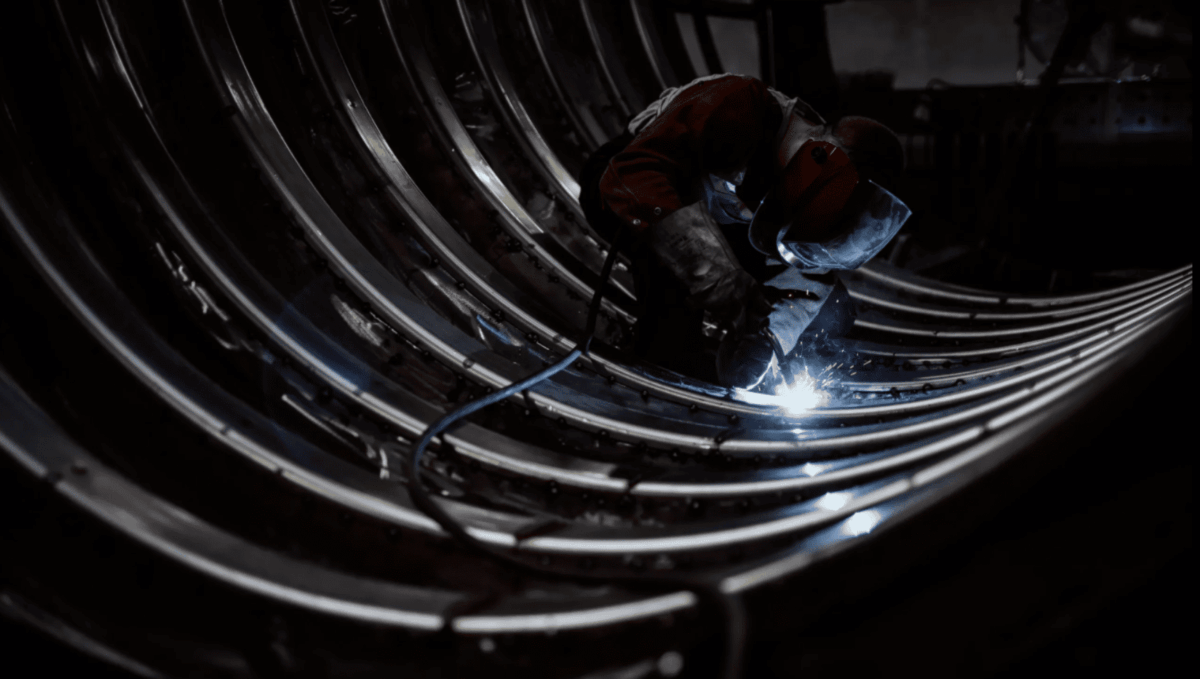
The rotomoulding moulds is the unsung hero and key to the success of the entire process. It determines the shape, final appearance, and durability of the finished product. Production begins with mould preparation: adjusting the design to match the desired product shape, filling it with material, and sealing it tightly. Common materials used include:
- Polyethylene (PE) – the most widely used,
- Polypropylene (PP), Polyamide (PA) – less common,
- Additional colorants, UV stabilizers, and fillers.
Starting the Machine and Heating the Mould
This is a critical moment in the rotational moulding process. The sealed mould is placed into an oven and set into rotation. As it rotates, the mould heats evenly, melting the powder, which then adheres to the internal walls of the mould.
Temperature Control During Plastic Moulding
Rotomoulding requires operators to consistently monitor and maintain the correct temperature throughout the entire process. The mould continues rotating inside the oven during heating, ensuring uniform distribution of material across the inner surface. If the temperature is too low or heating time too short, the powder won’t melt properly; too much heat or time increases the risk of burning the material.
Cooling the Mould
To ensure the durability of the component, the mould must be cooled after heating. It is transferred to a dedicated cooling station, while rotation continues. Cooling can be achieved with air, water, or a combination of both – depending on the product and machine used. As the mould cools, the plastic solidifies against its walls, taking on the desired shape and strength.
Final Processing and Quality Testing
At this point, the rotomoulding process nears completion. The cooled mould is opened, and the formed product is removed. Final processing may include trimming excess material, cutting edges, or creating openings. Each product undergoes quality testing – rotomoulding is known for meticulous attention to detail, ensuring durability, functionality, and aesthetics in every item produced.
When ordering our specialized machines, we provide on-site installation and detailed operational training. We’ll show you how rotomoulding works, which aspects to monitor, and when operator intervention is necessary – ensuring smooth production and improved performance from the start.
The Most Popular Rotomoulding Machines
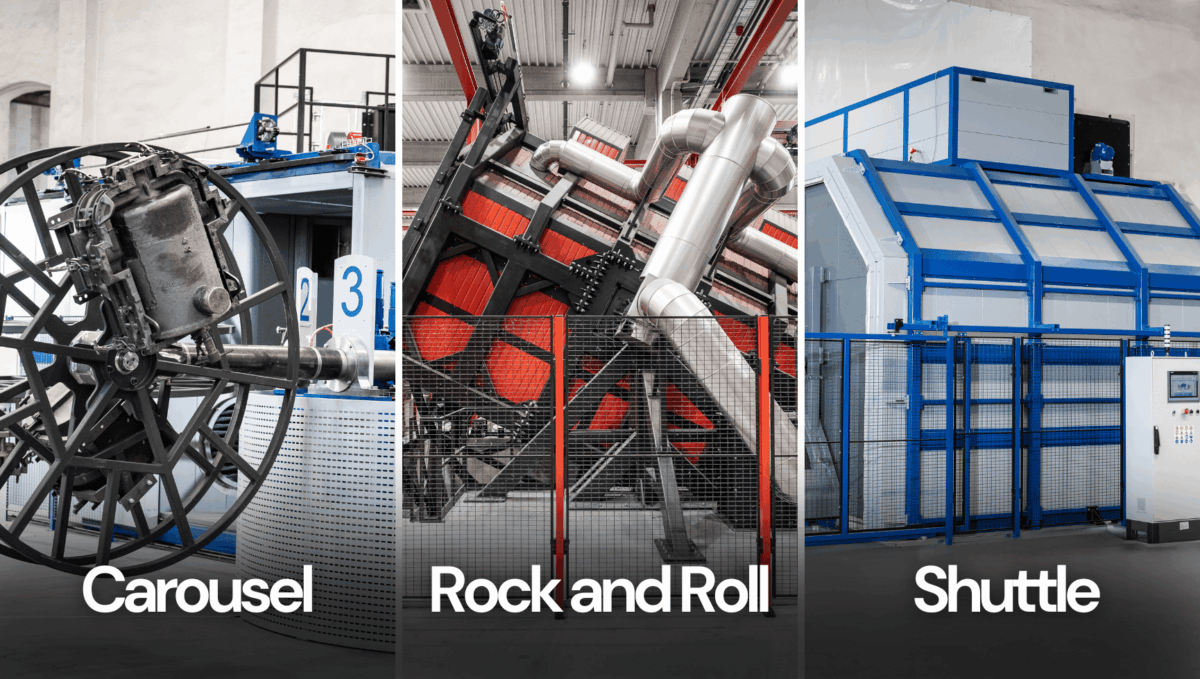
Carousel, Rock and Roll, and Shuttle – these are the three most widely chosen rotomoulding machines that have significantly boosted the popularity of rotational moulding. Each machine has its own features and deserves individual discussion – especially since the choice of machine directly affects your ability to produce components of various shapes and sizes.
Carousel Machine
The most universal and commonly selected machine. Ideal for medium or large-scale production of tanks, barrels, toys, kayaks, and similar items. It features 3 to 6 arms rotating around a central axis. Each arm can independently go through three essential stations: loading, heating, and cooling. This setup enables multiple processes simultaneously, making it the most efficient option. Carousel machines are user-friendly and accessible even for operators unfamiliar with rotomoulding. OREX ROTOMOULDING can customize these machines to suit your production needs.
Rock and Roll Machine – Pendulum type machine
The name itself indicates that it is a Rock and Roll machine. The movement of the mold in the event of an occurrence is basically rocking (up-down and left-right) and rotation of one around the molds. In comparison with the carousel machine, it is slightly less efficient – what happens with the pendulum type machine in one or two maximum molds. However, we often create such solutions with a safe piece. Rotational molding of plastics with the help of this machine has proven to be the best in the production of long elements. Among them are available kayaks, industrial containers or pipes with a technical effect. It is possible that the Rock and Roll Machine often hits the market, which are responsible for the creation of firmware.
Shuttle Machine
Completing the trio is the Shuttle machine – perfect for compact and flexible production environments. With two arms that move linearly between the oven and cooling zone, Shuttle machines occupy less space than Rock and Roll models. The arms operate independently, enhancing efficiency similarly to the carousel model. This design supports high productivity with optimal material use and reduced production time.
Not sure which rotomoulding machine is best for your business? We’ll help you choose the right one!
Rotomoulding – Key Advantages of Rotational Moulding
You now understand what rotomoulding is, where it’s used, how the process works, and which machines are most popular in Poland and internationally. Let’s close with a summary of the greatest advantages of this method. Apart from versatility, rotomoulding also offers:
- Low cost of moulds and production tools,
- Capability to produce high-quality plastic components,
- No need for welding, gluing, or joining,
- High durability of finished products,
- Material and energy efficiency,
- User-friendly machines despite complex appearance,
- Machines tailored to your specific needs.

Rotomoulding vs Injection Moulding
This is a common question, so let’s compare both methods. The main difference is in the type of products they produce. Rotomoulding is ideal for larger components with unusual shapes, while injection moulding excels in producing small, complex parts. Economically, rotomoulding moulds are significantly cheaper than injection moulds, which are also less durable due to high-pressure operations. As a result, rotomoulding is more cost-effective over time. Injection moulding may be more efficient for large-scale mass production with a shorter production cycle.
Sustainable Development – Rotomoulding as an Eco-Friendly Production Method
Modern production facilities must consider sustainability. More manufacturers and customers focus on eco-friendly practices. Rotomoulding meets these expectations with:
- Zero production waste,
- Durable products regardless of size,
- Easy recyclability of plastic components,
- Use of renewable energy sources,
- Reduced energy consumption,
- Lower raw material use.
Summary: Rotomoulding
We’ve provided all the key information. Now you’re equipped to make an informed decision for your business. Use the advantages of rotomoulding and produce according to the highest industry standards. It’s a noteworthy alternative – especially for those who value quality, efficiency, and tailored technological solutions. Rotomoulding adapts to your space, employee skills, and project goals. It’s truly a made-to-measure solution for Polish manufacturers.
Precision in production
OREX ROTOMOULDING will help you grow your manufacturing business!
Interested in this plastic moulding technology? Order your machine from experienced industry leaders. At OREX ROTOMOULDING, we’ve been designing and implementing such solutions for companies of all sizes for years. We ensure proven methods, tailored machines, and full operational training – plus post-sale support and servicing.
FAQ – Questions and Answers
No. While both methods are used to manufacture plastic components, there are several key differences that make rotomoulding a better alternative to injection moulding. Most importantly, the production processes differ. Rotational moulding (rotomoulding) involves heating a rotating mould, whereas injection moulding forces plastic granules into a mould under high pressure. If you’re looking for high product quality at a reasonable production cost, rotomoulding is definitely worth considering—it allows you to create a wide variety of components!
The list of industries using our machines is impressively long. The rapid development of rotomoulding has led to its use in manufacturing various types of tanks (for water or chemicals), storage containers, recreational equipment, garden furniture, kayaks, children’s toys, and much more. As you can see, the possibilities with rotomoulding are truly vast.
Absolutely! Our process generates virtually no production waste, and the resulting products are both durable and easy to recycle. What’s more, the machines themselves are environmentally friendly—there’s no need for pressure, and they consume significantly less energy, making them a more sustainable solution.
Yes, provided the machine is properly designed and tailored to the capabilities of a specific facility. At our company, we focus on delivering technology that meets the unique needs of each production plant. We have experience installing custom machines in both large and much smaller operations. If rotomoulding has sparked your interest, feel free to get in touch with us!
It’s no secret that the cost of production components directly impacts the final price of the product. Moulds for rotomoulding are significantly cheaper upfront than those used in other manufacturing methods. This lower cost doesn’t compromise product quality, however. Moreover, high-grade stainless steel or aluminium moulds minimize the need for frequent replacements. A single mould can produce hundreds of individual product series.